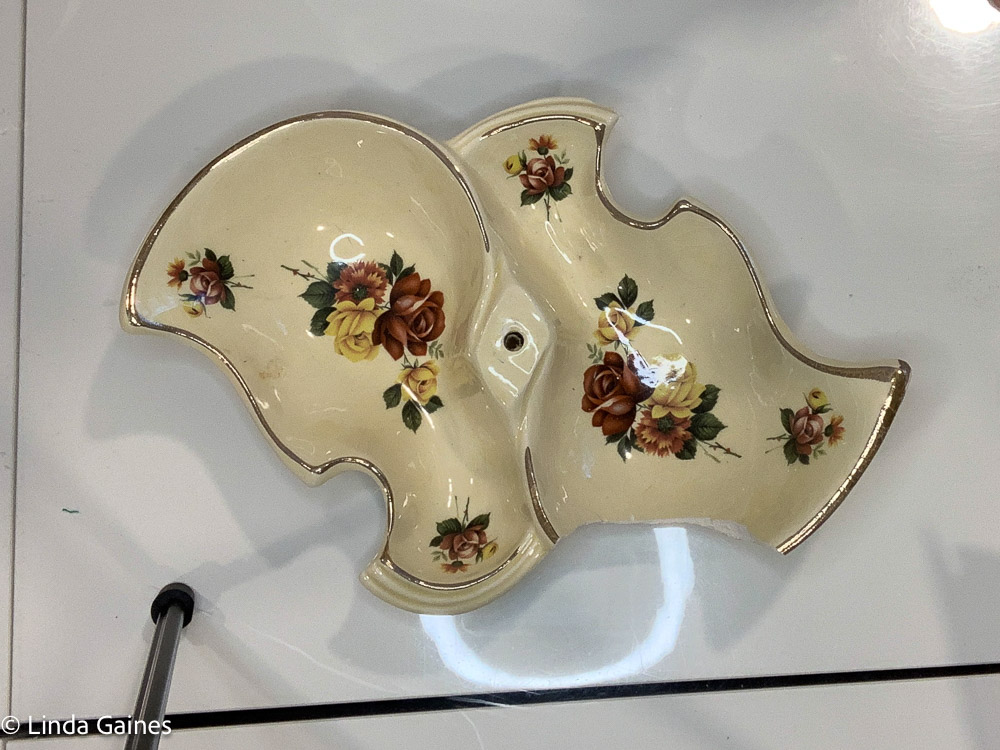
I continue to experiment with hitting breakable things with a hammer and putting the pieces in a rock tumbler. I had a piece of broken pottery with some pretty roses printed on it. I wanted to see if I could tumble it but keep the roses. It also had gold painted on the edge, but I assumed there was no way to maintain the gold paint.

I used my normal process of hitting it multiple times with a hammer to break it into small pieces. Many of the pieces had no roses on them, but the back of the pottery had some interesting ridges of texture, so that could make for nice sea pottery.

I decided to try tumbling the pieces without any grit. I just added the normal pea gravel and water to the tumbler drums, and I also added some walnut shell granules. My hope was that the pea gravel and walnut shells would soften the edges of the pieces but not remove the glaze and printed roses.

I then tumbled the pieces for a week. After a week, the gold paint was almost entirely gone. There was some remnants left, such that I could tell where it had been. The glaze and rose prints were still completely intact. However, the sides were still very sharp. I could not tell if the sides were softened at all, but I think they might have been.

I decided to go ahead and use grit. I put the pottery pieces back in the tumbler drums with the pea gravel and used stage 3 grit. I let them tumble for about a week. I checked the pieces every other day to determine if the sides were softening.
Unfortunately, after a week, the sides did soften like I hoped, but much of the glaze was removed, and all of the printed roses were removed. The textured ridges from the bottom of the pottery do provide a nice look after tumbling. Crazing was also visible on some pieces, and I kind of like that look. However, I was disappointed that all the printed roses were removed, and much of the glaze seemed to have been removed also. It was an experiment though and a learning experience, so it was not a waste. Also, the pottery was broken and would have been thrown away otherwise.

For more information, see my video of the process.