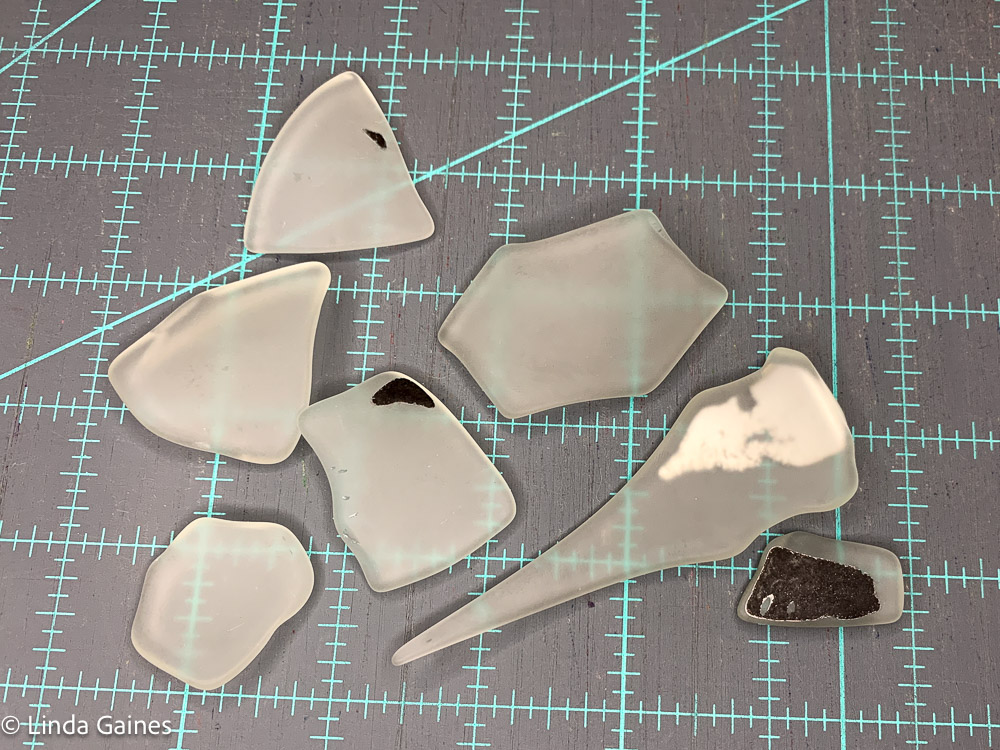
I have made several batches of sea glass now using wine bottles as I documented previously. Recently while buying wine I found some really pretty bottles of prosecco that appeared to be clear glass painted with metallic paint. I was curious if there was any way to make sea glass with them such that the edges would be smoothed, but the paint would stay intact. Hence it was time for an experiment.

I started with two bottles painted with pretty metallic paint of gold and pink. As before, I hammered the bottles until it broke into nice size pieces. Once broken, it became more clear that the bottles were just clear glass that were painted on the exterior. Some of the paint seemed to chip a bit just from the hammering, which did not bode well for the outcome.

As before, I put the glass pieces in rock tumbler drums with pea gravel. Previously, I used stage 1 grit with the glass, but I tried stage 2 grit for this experiment. Stage 2 grit is less course than stage 1, so in theory, this should scour the glass less.

Then I tumbled them for a week.

Finally as before, I then rinsed the glass pieces. As the grit was finer, after rinsing everything, I put the glass and pea gravel back in the drums with water and some Dawn dish detergent. I then put them on the tumbler for an hour to get everything nice and clean.

Unfortunately, the results were not good. I did get nice clear sea glass. With the stage 2 grit, the glass was bit less scoured and felt a bit smoother to the touch than glass where I used stage 1 grit. However, with the exception of a few small patches, all the paint was lost. As you can see in the photo above, a few pieces did have a small amount of paint left on them. When viewed from the other side, the paint looks silver. When viewed from the painted side, the paint looks grayish. I do not know where the gray color comes from. The only thing I can come up with is the grit has somehow adhered to the paint remnants. Thus, this experiment failed in its objectives, but I did learn from it. I may try this again with a different stage grit.
Below is a video of my experiment to provide more information.